Core concepts
Kin is built around a few simple ideas. Get these, and the rest is obvious.
People
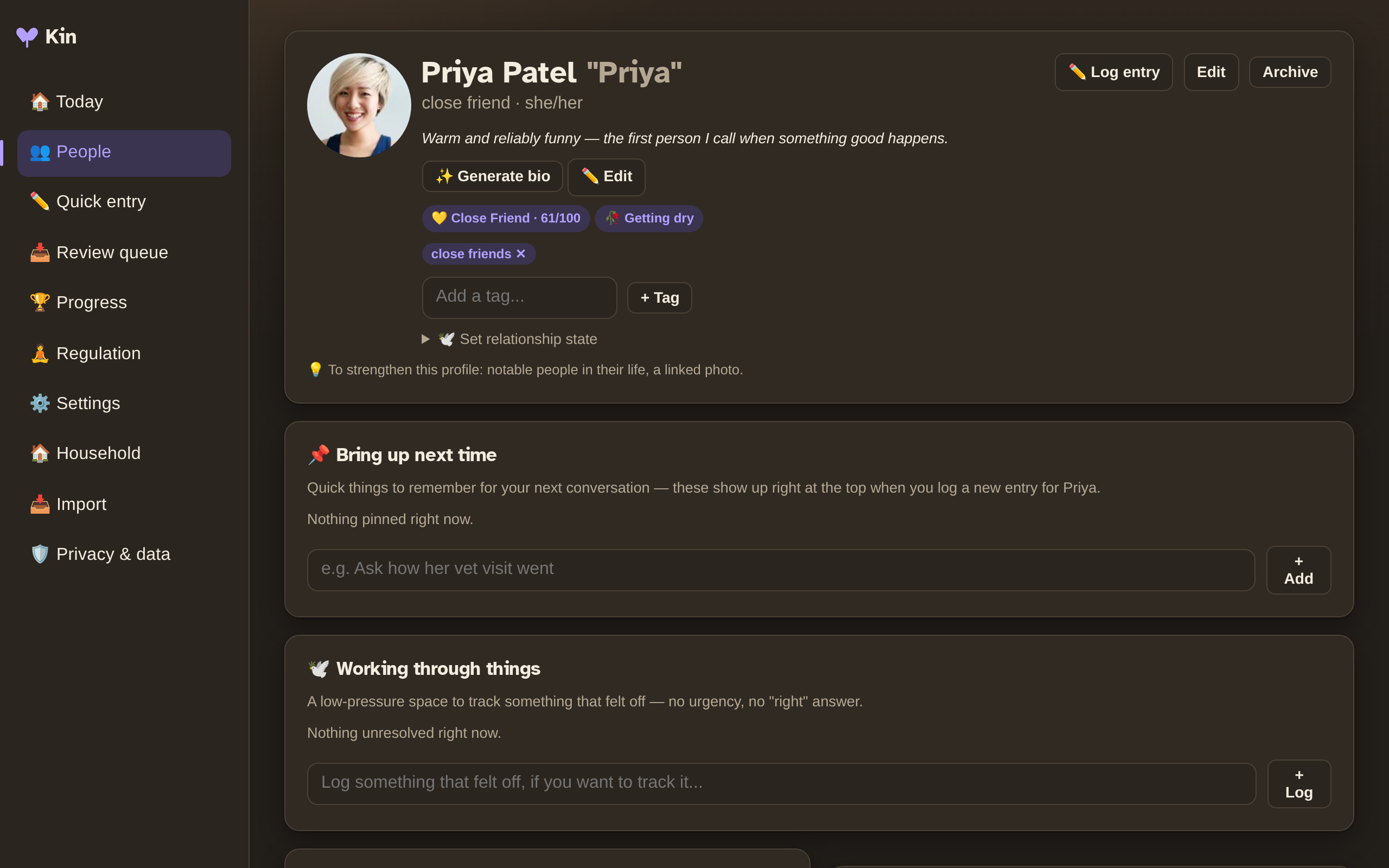
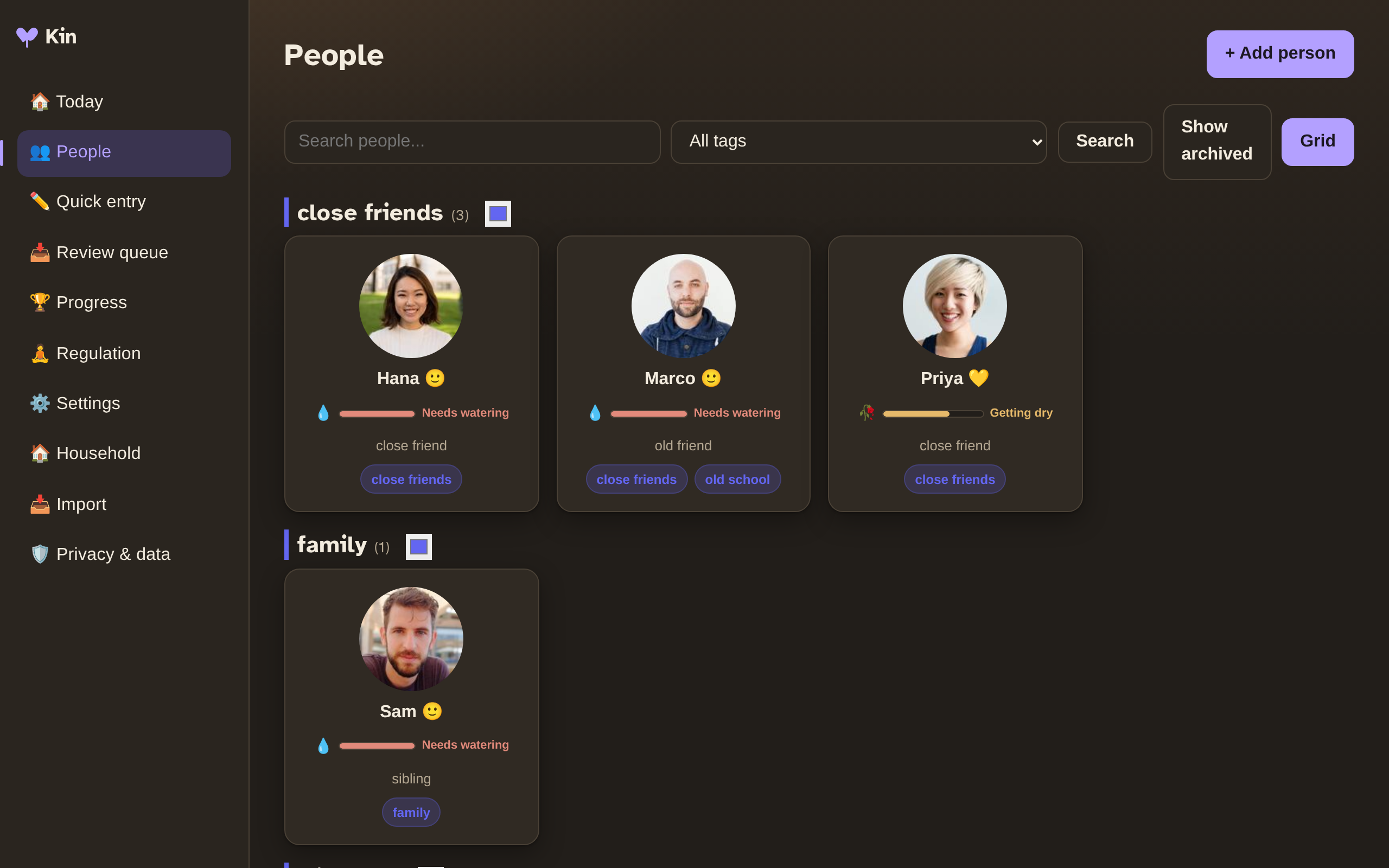
A person is the heart of Kin — a profile for someone in your life. It holds their birthday, how you met, contact info, occupation, hobbies, and free-form notes. You can also attach:
- Tags (called circles) — group people your own way:
family,work,close friends. - Notable dates — anniversaries, their kids' birthdays, anything recurring.
- A scratchpad — "bring this up next time" reminders.
- Gift ideas — so you never scramble again.
The journal
The journal is a quick-capture log. One box: who you saw, what happened, when. Optionally tag the people, attach photos, add a location, and rate the energy it cost (low/medium/high) so you can plan your social bandwidth over time.
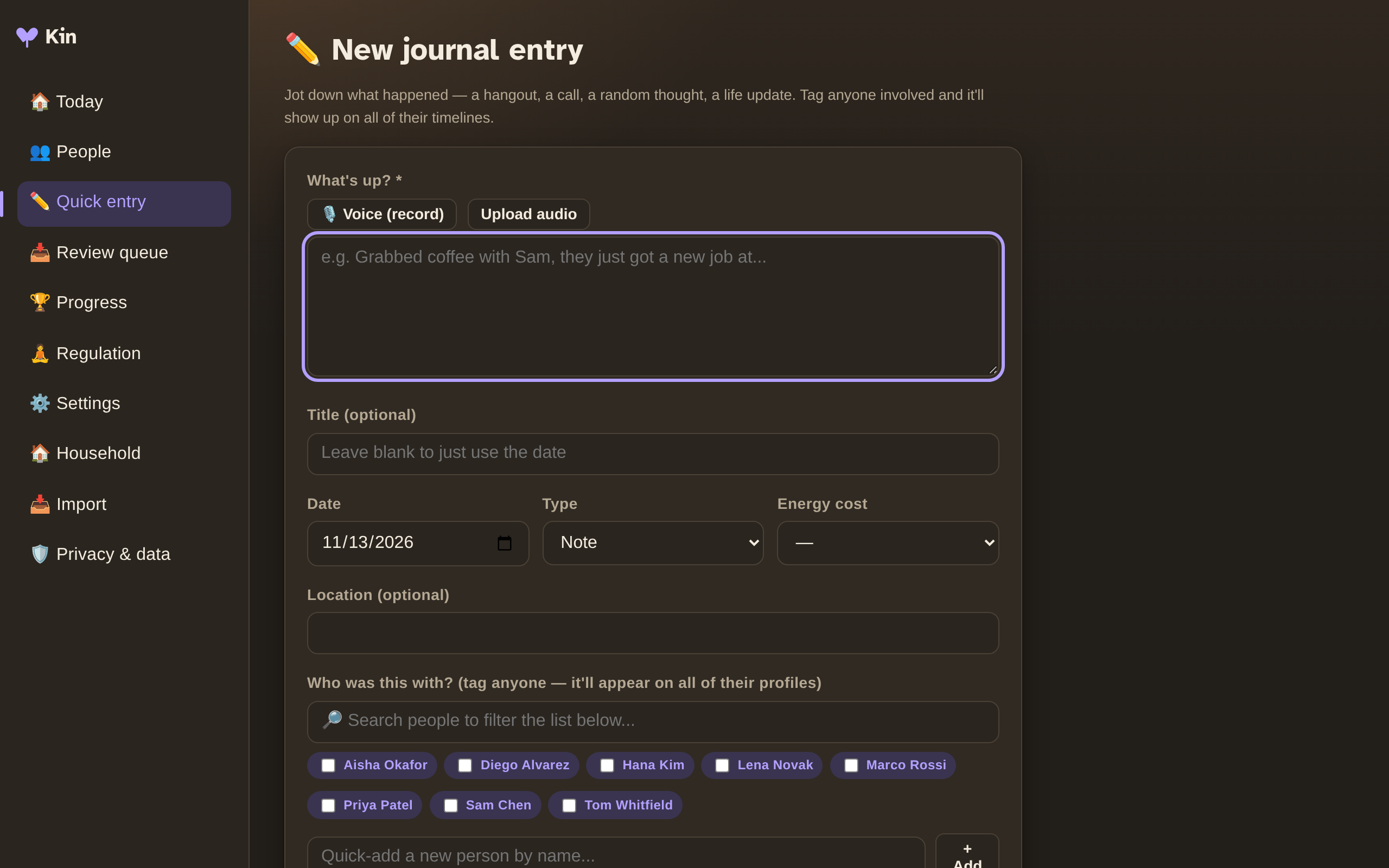
Entries roll up onto each person's timeline automatically, so a person's profile becomes a living history of your friendship.
Gentle nudges (not guilt)
Kin reminds you to reach out — but carefully:
- Check-in cadence — set how often you'd like to touch base with someone (e.g. every 60 days). Kin shows a gentle "needs watering" meter as that date approaches, framed like a houseplant, never an alarm.
- "Time to reach out" — a calm list of people who are due, with an easy snooze.
- Grace mode — pause all nudges for a week, no reason needed. Rest is a feature here.
Relationship states
You can mark a relationship as drifted or wants space, or Kin can suggest it. These states soften or suppress the nudges for that person — so Kin respects when a relationship needs room.
The regulation toolkit
A quiet corner for when thoughts are looping: breathing exercises, grounding, a "facts vs. the story anxiety is telling me" reframe, and a few gentle games. It's always one click away, no AI, no pressure. Read more in Features.